
Your Cart (₵0.00)
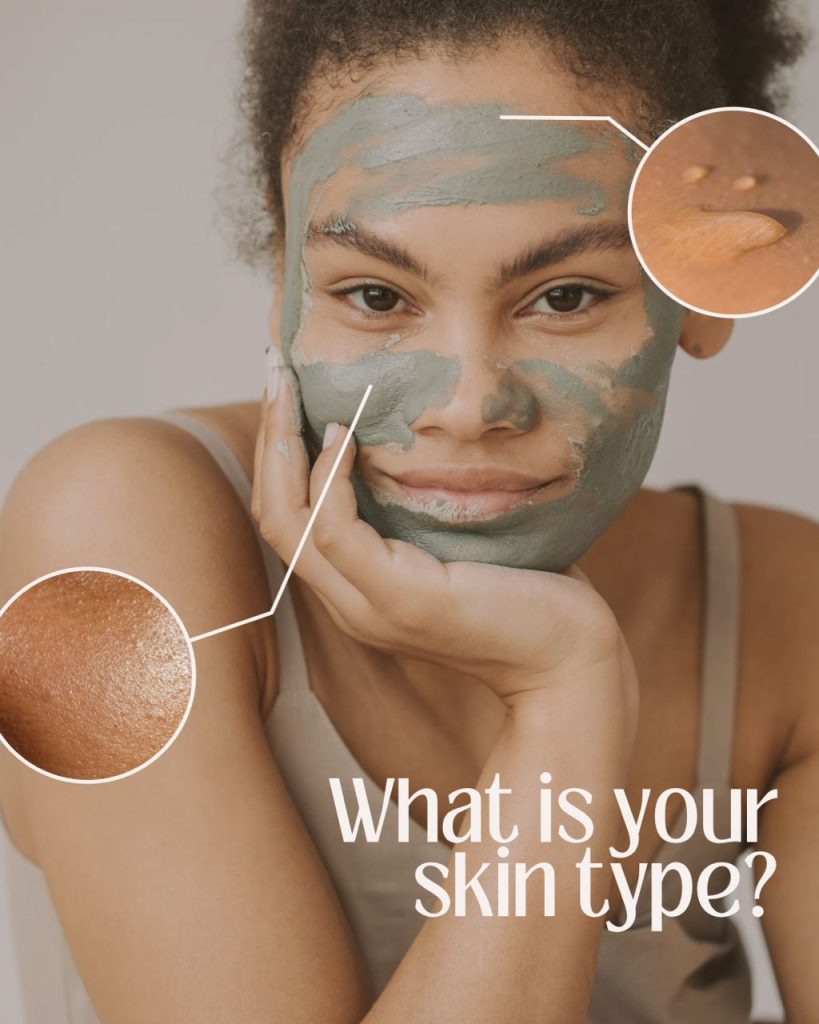
What is your skin type?
The skin is the largest organ of the human body. It consists of three main layers: the epidermis, dermis, and hypodermis.
Your skin type is the natural type you are born with. However, as you age, factors such as environmental stress, hormonal changes, and over-exfoliation can alter your skin type. Understanding your skin type is essential because it helps you choose the right products for your specific skin needs.
Below are guidelines to help you identify your skin type at home.
HOW TO IDENTIFY YOUR SKIN TYPE AT HOME
Step 1: Wash your face with a gentle cleanser.
Step 2: Pat your skin dry and avoid applying any products.
Step 3: Wait for 30–60 minutes.
Step 4: Observe how your skin looks and feels.
NORMAL SKIN
- Has a balanced level of oil and water
- Less prone to breakouts
- Pores are barely visible
- Feels smooth and comfortable
OILY SKIN
- Produces more oil (sebum) than water
- More prone to breakouts
- Pores appear enlarged and visible
- Skin looks shiny or greasy
DRY SKIN
- Produces less oil
- Pores are small and tight
- May feel rough, tight, or irritated
- Can experience flaking or itching
COMBINATION SKIN
- Oily in the T-zone (forehead, nose, and chin)
- Cheeks may be dry or normal
- Different areas of the face may have different textures
Regardless of your skin type, a basic skincare routine should consist of a gentle cleanser, a moisturizer, and sunscreen. Choose a sunscreen with SPF 30 or higher for adequate protection.